A Rainy Afternoon Film Exercise: Build a Scene Around Reflections
Try a rainy afternoon film exercise that turns window glass and household objects into a readable indoor scene, with a simple plan for filming and editing.
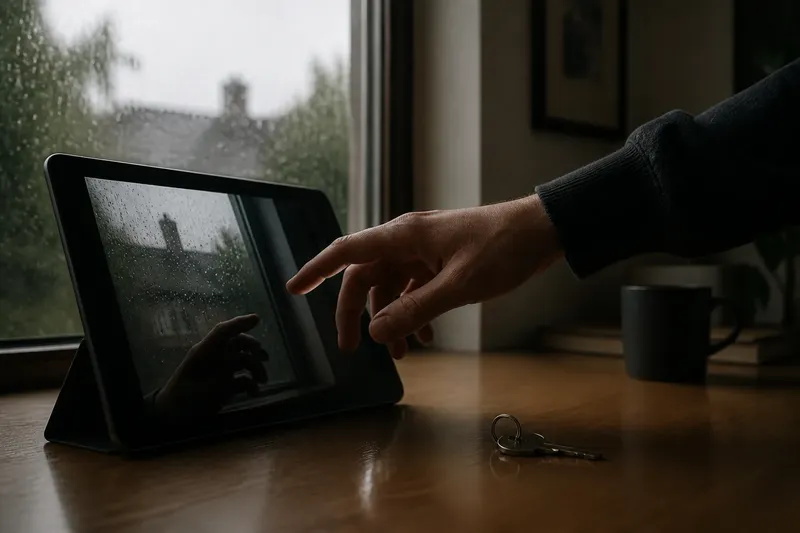
A rainy afternoon film exercise can turn a rain-streaked window and an ordinary object into a scene about mistaken identity. Use reflections to make the viewer question what a character sees, then let a change in camera angle settle—or deepen—that uncertainty.
You need a phone or camera, one room and a small object. Work at whatever pace suits the light: observe, choose a visual problem, film a few views and edit them into a short sequence.
Find a reflection that changes what the viewer can see
Move around a window, switched-off tablet or glossy tabletop and watch the image shift. Through wet glass, the room may overlay the garden; a dark screen can catch a hand while hiding what lies behind it; a spoon can bend a bright patch of window into a wavering shape.
Look for a reflection that creates a specific uncertainty, not just a pretty double image. Can you see a person but not what they are reaching for? Does the window merge an object indoors with something outside? These questions give the surface a job in the scene.
Make a few short notes in plain language, such as “hand appears on screen before it reaches the table” or “key merges with the pale sky”. Each note should describe what the camera can show, not merely how the surface looks.
- Window glass: If the room and outside view overlap clearly, use the pane to make two spaces seem connected; if glare swallows the detail, change the angle or choose a darker surface.
- Switched-off screen: If it reflects a hand or face against a dark background, use it to withhold the direct view; if the screen reflects the camera or operator, reposition the camera or abandon that surface.
- Curved glass or a spoon: If a small object bends into an unfamiliar shape, use it for a brief moment of visual doubt; if the distortion is unreadable on screen, move closer or choose a simpler reflection.
- Glossy table: If an object and its inverted reflection remain distinct, use the surface to suggest a second version of the object; if they merge, change the background or move the object.
Keep the camera and lights away from wet surfaces, and do not lean out of a window to arrange a shot.
Build the scene around a mistaken reflection
A reflection becomes part of a story when it changes what someone thinks is happening. Keep the action small: a person searches, mistakes an image for the thing they need, then discovers what is really there.
Imagine you have a key, a rain-streaked window, a switched-off tablet and a table. First, place the key beside the window and frame its glint as part of the glass reflection. Next, film a hand noticing that glint on the tablet and reaching towards the screen. Then show the hand finding no key there, followed by a closer view of the real key on the table. In the edit, the result is a clear shift from mistaken image to actual object; the trade-off is that the audience knows the answer as soon as the direct view appears.
If you want to preserve uncertainty, end on the reflection rather than revealing the object. Before filming, write one sentence describing the change the viewer should notice. For instance: “The reflected key sends the search to the wrong place, then the real key appears in the same frame.”
Plan around the light you actually have
Rainy weather can make window light shift, so choose a position that still works if the sky brightens or dims. A dark screen or tabletop may keep a reflection legible when the window view grows pale. There is no need to wait for a particular part of the afternoon.
Clean the camera lens and, if your camera app allows it, lock focus or exposure after framing the reflection. If the image keeps changing brightness when a hand enters the frame, keep the camera still and let the hand move instead.
Frame three distinct views so the audience can follow the visual idea:
- Locate the surface: show enough of the window, screen or table to make the reflection’s position clear.
- Show the mistaken image: include the reflection and a visible clue that suggests what the character thinks they see.
- Change the view: reveal the object directly, or hold on the reflection to leave the uncertainty unresolved.
Check each frame on the camera screen from the shooting position. If the reflection vanishes there, adjust the angle before recording.
Keep the room consistent without overbuilding it
Move a lamp or bright object if it appears in the glass where you do not want it. A piece of dark card beside the camera can reduce unwanted reflections, as long as it stays out of the frame and does not block the lens.
Mark the camera position and the object’s place with removable tape. Those references help you return to the same composition for a closer view, especially if you need to film a hand reaching towards the object more than once.
Imagine the window light fades while you are filming. Keep the key and table in place, then switch the next shot to a closer reflection in the dark tablet. The expected result is a legible detail despite the change in daylight, though the cut may feel more abrupt than a sequence filmed under steady light.
Film the shots so the reflection can be read
Record a clear view of the room and action, then the reflection that misleads the character, then the view that changes its meaning. You can film these as separate clips rather than trying to capture the whole scene in one take.
Hold the camera still briefly before and after each action. If a hand picks up or moves an object, keep the movement going in the same direction across neighbouring shots; otherwise, a cut can make the action seem to reverse.
Choose one main visual change per shot. A still frame can let the viewer study a double image; a slow shift in angle can reveal what lies behind it. Combining a camera move, a focus change and a performer’s gesture may make the reflection hard to read.
Review the clips on screen. If glare hides the reflection, adjust the angle; if the reflected object merges with its background, change the object’s position or use a darker surface.
Edit the sequence around the change in meaning
Arrange the clips so the viewer first understands the room, then sees the misleading reflection, then encounters the result of the search. A cut from the reflected key to the hand reaching for it can make the mistake clear; a cut to the real key can resolve the confusion or create a fresh question.
Use the editing app already on your phone or computer. Trim the setup from each clip, but leave enough time for the eye to find the reflected detail. A subtle reflection needs more breathing room than an obvious hand movement.
Listen as well as watch. Rain at the window, a sleeve brushing the table or a key tapping the surface can anchor the action in the room. If a sound distracts from the image, lower it or use room tone recorded in the same space rather than adding music by default.
What should you do when the reflection does not read?
How can you reduce glare on a window?
Shift the camera angle first, then check the frame again. If bright objects or clothing appear in the glass, move them or switch off a nearby lamp.
Can a phone camera film reflections clearly?
Yes, if the reflected detail has enough contrast and the phone stays steady. Tap the detail to focus, or rest the phone on a shelf or a stack of books.
What if the rain stops?
Keep filming indoors with a switched-off screen, glass bowl or glossy table. The scene can still turn on a mistaken image even without raindrops on the window.
What if the reflection is too subtle in the edit?
Try a closer shot or hold the image longer so the audience has time to notice it. If it still disappears on screen, change the angle or replace it with a clearer reflective surface.
Save the details that made the image work
After exporting the scene, note which surface carried the story, where the camera stood and what the light was doing. Add one detail that remained unclear on screen; that note gives your next rainy afternoon film exercise a useful starting point.
Watch the sequence once without pausing. If the reflection changes what you understand about the search, the surface is doing more than decorating the frame; it is shaping the action.