The Perfect Take Is a Myth: Keep the Useful Imperfection
Keep useful imperfection in a film performance by judging each take for meaning, clarity and sound, not exact repetition. Learn when variation helps.
A caught breath can make a film performance feel more alive than a perfectly repeated line. To keep useful imperfection in performance takes, listen for what changes in the moment—and check that the words and sound remain clear.
Variation is not automatically expressive, and a stumble is not automatically a flaw. The useful question is whether a take reveals something about the character, distracts from the scene or creates a problem the editor cannot solve.
Listen for what the variation tells you
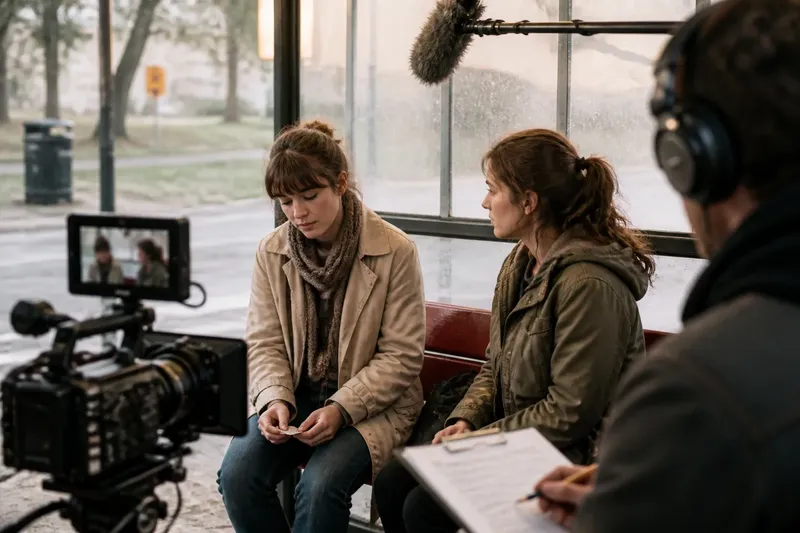
Imagine a beginner film scene in a bus shelter. A character tells a companion, “I’m glad you got the job,” then looks down and folds a paper ticket while the other person waits. In one take, the line is smooth; in another, a breath catches before “glad”. That small change might suggest the character is trying to sound generous while hiding disappointment.
The breath only helps if it fits the actor’s intention and the rest of the exchange. A late glance, a hand that hesitates or a change in vocal texture can all add meaning, but none has a fixed interpretation outside the scene.
Watch the complete exchange rather than judging an isolated line. Ask what the character appears to want, and whether the variation makes that intention easier to read.
Separate expressive choices from usable problems
A performance can be emotionally revealing and still be hard to use. A swallowed word, a sudden turn away from the microphone or a prop that appears in one shot but not the next can limit the editor’s choices.
Keep a brief note beside each take, such as “clear, restrained” or “strong hesitation, final word obscured”. Concrete descriptions help you compare what each version offers without labelling one take perfect.
- If the key words are clear, keep the take in consideration; if they are masked, choose a clearer take or record the line again.
- If a breath or pause supports the character’s intention, preserve it; if it interrupts the meaning, try a version with a more direct delivery.
- If the actor’s gaze connects with the other performer, check whether that connection suits the scene; if it misses an important reaction, use a take with a readable exchange.
- If a hand or prop matches the adjoining shot, the take may cut smoothly; if its position changes conspicuously, choose a matching take or alter the edit point.
- If the room tone stays consistent around the line, keep the sound in the edit; if a noise covers speech, use a clean alternative or record another version.
- If the variation holds attention on the character’s conflict, retain it; if it draws attention to itself, favour a simpler performance.
Give the actor an intention, not a copy target
When an unplanned breath or glance works, avoid asking the actor to reproduce every detail. That can turn a spontaneous response into a demonstration. Instead, offer a playable intention: the character wants to congratulate a friend but is struggling to hide disappointment.
Say you have two recordings: one has a hesitant delivery but the actor looks away, while the other is less hesitant and includes a clear exchange of glances. If the scene depends on the companion registering the congratulations, the second take may communicate more clearly. The choice follows the scene’s purpose, not a rule that hesitation is always better.
If a specific pause matters, describe what it needs to do: leave room for the other person’s response. The actor can find a fresh way to reach that moment rather than mechanically copying a previous take.
Keep enough context to judge the take
Let the camera run through the other actor’s response where practical, and give the performers a moment before stopping. This preserves the silence and reaction you need to assess the exchange, rather than only its spoken line.
Listen back to the recording as well as watching the picture. A breath may be expressive in the room but buried by a refrigerator, rustling sleeve or an abrupt change in background sound. Check the clip before deciding whether the take is usable.
A spoken take number and a few words of notes are often enough to distinguish an emotionally revealing version from a technically clearer one during editing.
Decide whether another take solves the problem
Before asking for a reshoot, name the issue plainly. Is a necessary word unclear? Does a movement conflict with the next shot? Or is the performance simply different from rehearsal? If you cannot identify a specific problem, watch the full exchange again before changing it.
Record another take when the scene’s meaning is obscured, continuity blocks the edit or the performance contradicts the intended moment. You can also capture a calmer alternative when you are unsure which tone will fit the finished film. Keep the more surprising take as an option rather than discarding it by default.
Make the request narrow: clarify one line, begin one movement earlier or leave more room for a response. Changing several things at once makes it harder to judge what improved and may flatten the quality you wanted to keep.
Which take should you keep?
Should every stumble stay in the edit?
No. Keep a stumble when it reveals hesitation or makes the character’s effort feel present. Choose another take when the stumble obscures meaning or distracts from the exchange.
How can you tell whether a variation works?
Watch the full scene and ask what the character appears to want. If the breath, glance or timing makes that intention easier to understand, the variation may be useful even if nobody planned it.
What if the strongest performance has a sound problem?
Check whether another take preserves the important words and emotional intention. If the key line remains unclear, record another version with the same intention and cleaner sound.
Can you combine parts of different takes?
Sometimes, but a cut may reveal a changed gesture, breath or gaze. Compare the movement and background sound around the edit; if the join calls attention to itself, use a complete take or a different edit point.
Keep the take that serves the scene
Imagine the bus-shelter scene has two versions. The first has a caught breath that makes the congratulations feel effortful, and every word is clear; the second is smooth but leaves the character’s disappointment harder to read. If the companion’s reaction follows naturally after the first version, keep it. If the breath swallows “glad”, choose the clearer take or record another attempt with the same intention.
When deciding whether to reshoot, compare performance, clarity, continuity and sound. Keep useful imperfection in performance takes when it helps the audience read the moment; ask for another take when it prevents the scene from communicating. A precise reason for either choice is more useful than chasing exact repetition.