One Scene, Three Beats: Give a Short Film Somewhere to Turn
One scene, three beats can turn a modest short-film idea into a clear arc, with a visible opening want, a meaningful change and a decisive final image.
A one-scene short film often feels flat because its central moment changes nothing. One scene, three beats gives it a beginning, a turn and a final beat, so a simple action can become a story without extra characters or plot. The useful question is not what else could happen, but what becomes different by the end.
Choose a scene that can change
A compact scene needs a person who wants something, a circumstance that complicates it and a response that leaves a trace. The want can be modest: return a borrowed key, hide a cracked mug or persuade a friend to stay for tea. The complication need not be dramatic; it only has to make the original plan harder, stranger or newly revealing.
Before drafting dialogue, write the situation in one sentence: “Mara wants to return a key before her neighbour comes home.” Then ask what could make the return matter more than it did at the start. Perhaps the key is tied to a note she has not read, or the neighbour arrives early. Choose one pressure, not a chain of new incidents.
The beats are points of change, not three separate scenes or equal blocks of screen time. The opening establishes the immediate situation; the middle alters the character’s options or understanding; the ending shows a choice, consequence or image that makes the change legible.
Make the opening action carry the want
What goes wrong: The film opens on general atmosphere, then spends most of its running time explaining where everyone is and how they got there. Viewers may understand the setting but still have no reason to wonder what happens next.
What usually causes it: The writer treats the opening as a miniature biography or a tour of the room. In a short scene, context earns its place when it affects the action. A kettle clicking off matters if someone is waiting for tea; a long account of the kitchen’s history probably does not.
What to try: Begin with the character already doing something that expresses the want. Put an envelope in a coat pocket, rehearse a greeting under the breath or set a plate at an empty place. Let a couple of visible details carry the needed context while the action continues.
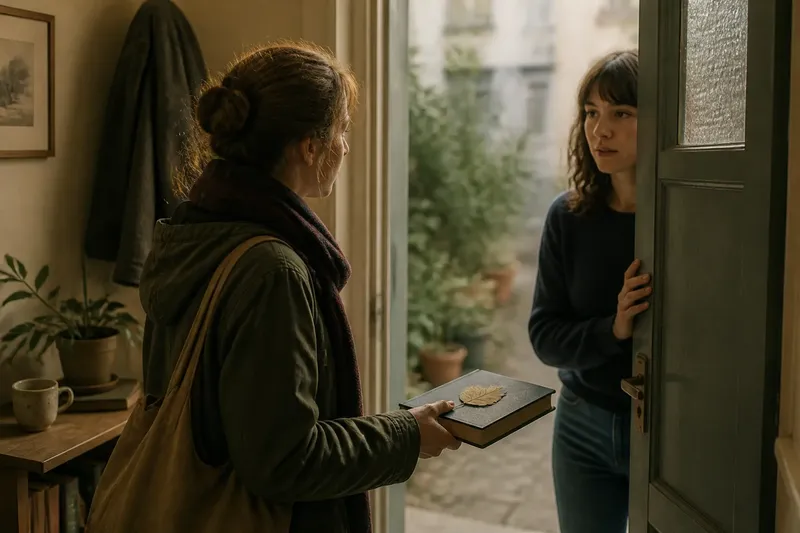
Say you are writing about a student who means to return a borrowed book without speaking to its owner. An invented opening could show them waiting outside a half-open door, holding the book out, then pulling it back when footsteps approach. The plan and hesitation are visible before any explanatory line arrives.
A useful opening gives the viewer a question to hold: will the character do what they came to do, and what might make them reconsider? Keep that question simple enough to answer within the scene.
Give the middle a visible turning point
What goes wrong: The character tries the same approach several times, but each attempt has the same emotional weight. A scene can bustle with gestures and dialogue yet remain static because nothing changes the character’s options.
What usually causes it: The middle has activity but no turn. A turn is new information, an obstacle, a refusal, a discovery or a decision that makes the opening plan harder to continue unchanged. It need not be a surprise twist; it needs to alter the meaning of what came before.
What to try: Identify the exact moment the plan stops working. Then make the character respond in a way that reveals something: they ask for help, conceal the real reason, admit they were wrong or choose not to press their advantage. If there is no clear turning point, remove repeated attempts until one consequential moment remains.
For the book-return scene, imagine the owner opens the door and recognises a pressed leaf inside the cover. The student meant to leave the book anonymously, but now must choose whether to keep pretending or explain why the leaf was saved. The leaf does not introduce a new plot; it changes the meaning of the return.
Make the turn visible where possible. A hand that had hidden an object can open; a character who stood at the threshold can step inside. Dialogue may sharpen the moment, but a change in behaviour lets the audience read it without a speech explaining the theme.
End on the consequence of the choice
What goes wrong: After the important choice, characters spell out what they have learned, then the film keeps going. The ending feels soft because it adds commentary rather than showing what the choice has changed.
What usually causes it: The writer fears the audience will miss the point. That fear often produces a closing line that repeats the action’s meaning, or an extra event that tries to make the moment feel larger than it is.
What to try: End on a consequence, a response or a precise image. The character might hand over the book, leave the leaf in place or wait while the other person decides what to say. Choose an ending that answers the scene’s opening question while leaving a little emotional space around the answer.
In the invented book scene, the student offers the book openly and the owner holds the door rather than taking it at once. The student’s choice has changed the immediate situation: the book is no longer being slipped away unseen, and the owner now has the chance to respond. The held door leaves that response unresolved without adding another event.
A final beat should not smuggle in a new problem merely to keep the story alive. If the next event belongs to another scene, let it remain beyond the frame. End when the choice has produced an observable consequence.
Let actions share the work with dialogue
What goes wrong: Characters announce what they want, describe the turn as it happens and explain the ending afterwards. The scene may be clear on paper but feel like a summary spoken aloud.
What usually causes it: Dialogue is being asked to provide all the information and emotion. Yet a pause, a held object or a missed chance to speak can do narrative work without another line.
What to try: For each line, ask whether it changes the exchange, reveals a new detail or puts pressure on a choice. If it only repeats what the image already shows, cut it or give the character a more specific reason to say it. Let objects and small actions carry part of the scene: a key set on the table, a cup turned so its chipped side faces away, a coat still held in one hand.
Silence needs shape, too. A pause becomes meaningful when the viewer can see what someone is waiting for or avoiding. Give the actor an action during the quiet—a thumb rubbing a book’s worn cover, for instance—rather than asking them to perform an abstract feeling.
How can you check whether the three beats work?
How do I know the opening beat is clear?
Write down the character’s immediate want, then point to the action that shows it. If the want only becomes clear after a long explanation, move closer to the moment the character acts. As a practical check, note the first action and the opening question it creates; if the action does not suggest a want, revise the action before adding background.
What counts as a real turn in a short scene?
A turn changes the character’s options, knowledge or willingness to act. If the next action would be exactly the same without the supposed turning point, that moment may be atmosphere rather than a beat.
Can the middle turn be quiet?
Yes. A character can decide not to send a message, stop hiding an object or look directly at someone for the first time. The change must be observable, even if its scale is small.
How should I tell if the ending arrives too late?
Mark the first moment when the opening question has been answered. If everything after it repeats the choice or explains its meaning, try ending there or on the next image that gives the choice a consequence.
- Opening want: Check whether the first action shows what the character is trying to do. If it does, keep it; if not, replace it with a concrete action that reveals the want.
- Opening question: Check whether that action leaves a clear question for the viewer. If it does, preserve the question; if not, sharpen the obstacle or the character’s hesitation.
- Middle change: Check whether a new detail, refusal, obstacle or decision alters the character’s options. If it does, keep the turn; if not, cut repeated business and make one moment change the plan.
- Visible response: Check whether the character behaves differently after the turn. If the change is visible, let the action carry it; if not, revise the response so the audience can see the new choice.
- Ending consequence: Check whether the final image shows what the choice has changed. If it does, end on that image; if not, add a consequence rather than an explanatory line.
- Extra material: Check whether a new character, history detail or obstacle competes with the main change. If it sharpens the choice, keep it; if it distracts, save it for another scene.
Keep the scene small enough for its turn to matter
When the structure still feels crowded, check how many separate things the scene asks the audience to track. A new character, a hidden history and a fresh obstacle can each compete with the main change. Keep the element that sharpens the character’s choice; save the rest for a different story.
One scene, three beats is not a formula for making every ending tidy. It is a way to give a small idea direction: establish what someone is trying to do, let one meaningful event change the terms, then finish on the response.
Before filming, write the opening action, turning moment and final image on separate lines. If each describes a different state of the character, the scene has somewhere to go; if two lines describe the same state, look for the missing change. One scene, three beats works best when the last image makes that change visible.